


Annemarie Jorritsma on why wind belongs in the alternative fuel debate
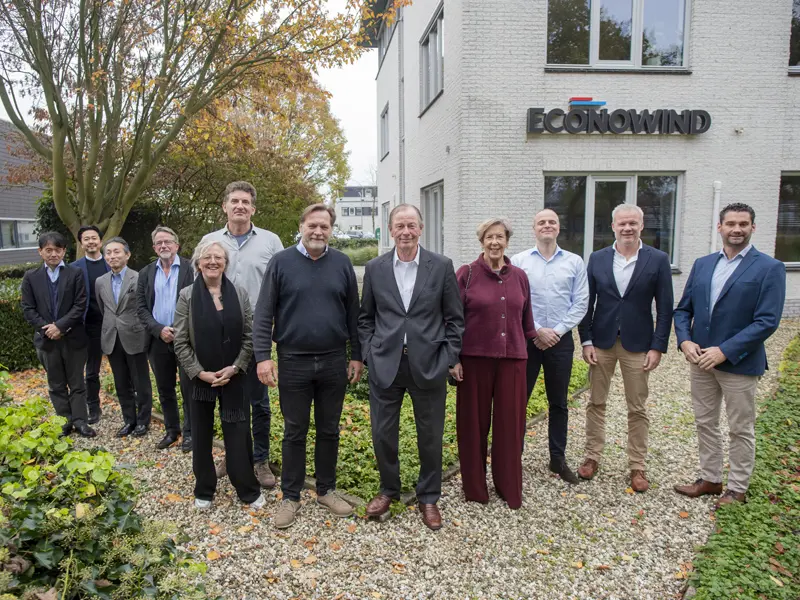
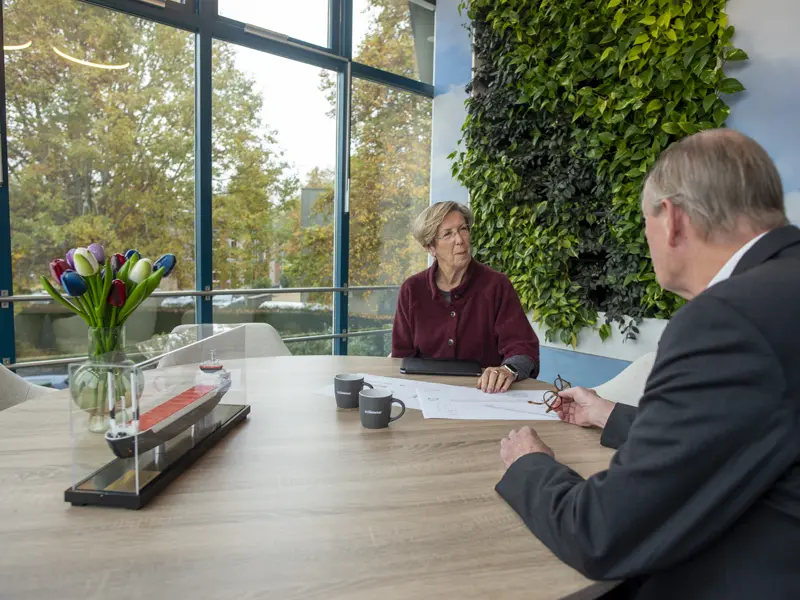
When Econowind was founded ten years ago, putting sails back on commercial cargo ships sounded like an idea from the past. Today, the Dutch company’s suction sails are operating on commercial vessels across Europe and beyond. As the company marks its tenth anniversary, a consistent warning comes from its advisory board: the technology is working, but government policy is lagging far behind.
Annemarie Jorritsma joined Econowind’s advisory board around four years ago. A former Minister of Economic Affairs and a veteran of Dutch politics, she understands the machinery of government well. She also knows how easily pragmatic industrial solutions get pushed aside by louder advocates for alternative fuels. For Jorritsma, the priority is clear: regulators must stop treating wind as just another fuel-saving add-on.
From a start-up to international scale
Jorritsma’s connection to Econowind started close to home. She lives on the east side of Almere, barely twenty minutes from the company’s base in Zeewolde. When founder Frank Nieuwenhuis and investor Piet Coelewij approached her, she was intrigued.
“I have always liked start-ups and scale-ups,” explains Jorritsma. “When I was Minister of Economic Affairs, supporting new companies was a core priority. When Frank and Piet came to me, the company was still very small. We were in the old building where the office sat right next to the workshop floor. You could look down and watch the wings being assembled one by one. It was not a production line yet.”
The presence of regional investors, such as NOM and Horizon Flevoland, helped seal her decision: “It was a transparent company, and the product was genuinely interesting.”
A decade on, Econowind looks very different. The business has outgrown its startup shoes. Turnover has doubled year after year. The firm has secured backing from a major Japanese shipowner and is preparing to produce parts in China to lower costs and tap into the Asian market.
“There is still plenty of room for innovation, and that is where we really need support from the government.”
Annemarie Jorritsma
A fuel in its own right
Despite that commercial progress, public policy has barely moved. When Jorritsma looks at the wider debate on clean shipping, she sees a basic misunderstanding. Almost all government attention and public money are being directed towards synthetic fuels such as green methanol, ammonia and hydrogen.
According to Jorritsma, the prevailing assumption in the decarbonisation debate is that once shipping develops a viable non-fossil replacement for oil, the problem is solved and wind power will no longer be needed.
“Once you have built the equipment to catch the wind, the fuel itself costs nothing,” Jorritsma stresses. “Everything wind can do is already there, so you don’t have to spend years developing the fuel.”
While alternative fuels are already positioning themselves on the market, Jorritsma points out that “they will remain very expensive for a long time. Then wind still remains a very cheap source.”
That is why Jorritsma argues that wind should count as an alternative fuel in its own right, rather than just an efficiency tool. Every kilowatt of thrust generated by the wind is fuel that never needs to be refined or bought.
“It is a source,” she says. “It cannot be that you only look at the development of a new replacement for fossil and then forget that wind is also a replacement for fossil.”
Staying on the policy agenda
The distinction between an energy-efficient add-on and an energy source is particularly important when it comes to state support. In the Netherlands, officials are preparing new subsidy guidelines to help the maritime sector adopt alternative fuels. As the scheme currently stands, wind technology remains excluded.
Part of the challenge lies in the sheer difference in corporate scale. The companies developing alternative marine fuels are large, established energy corporations with substantial resources to promote their projects and engage with government departments. Emerging clean-tech firms cannot match these budgets, which Jorritsma believes calls for a smarter, more coordinated approach.
When asked about France, where shipowners, shipbuilders, and wind propulsion technology providers formed Association Windship to represent the sector with a single voice, Jorritsma agreed that this is a very good approach. She believes a similar collective effort in the Netherlands, backed by regional investment agencies, would give the wind sector far more influence.
“This is not a government initiative, that is really an initiative which should be taken from the companies,” she says. “Then you have more power to go to the government, too.”
For Jorritsma, the wind sector needs to work persistently to stay on the radar of policymakers.
The case for retrofits
While policy debates often focus on the ships of the future, Jorritsma points to a much more pressing challenge: the fleet already on the water. Building brand new, low-emission vessels will take years. With shipyard capacity tight and global tensions keeping fuel prices high, shipowners are holding onto older tonnage far longer instead of sending it to scrapyards.
“You cannot live only from newbuilds,” Jorritsma says. “You also have to work with retrofits. An older, large ship stays on the market for so long, and those are the ships that don’t have the most modern engines. Their use of fuel is always rather high. Retrofitting is a very interesting instrument to bring that percentage of fuel down.”
Ten years after building its prototype units by hand in Zeewolde, Econowind is still refining its technology. Yet for Jorritsma, the work in government corridors is just as important as the work on the factory floor.
“The system is still in development, and every time we design something new, it becomes better,” she notes. “There is still plenty of room for innovation, and that is where we really need support from the government.”
For Jorritsma, the immediate next step is practical. When the new Dutch guidelines on alternative marine fuels are finalised, wind needs to be included on the list.


